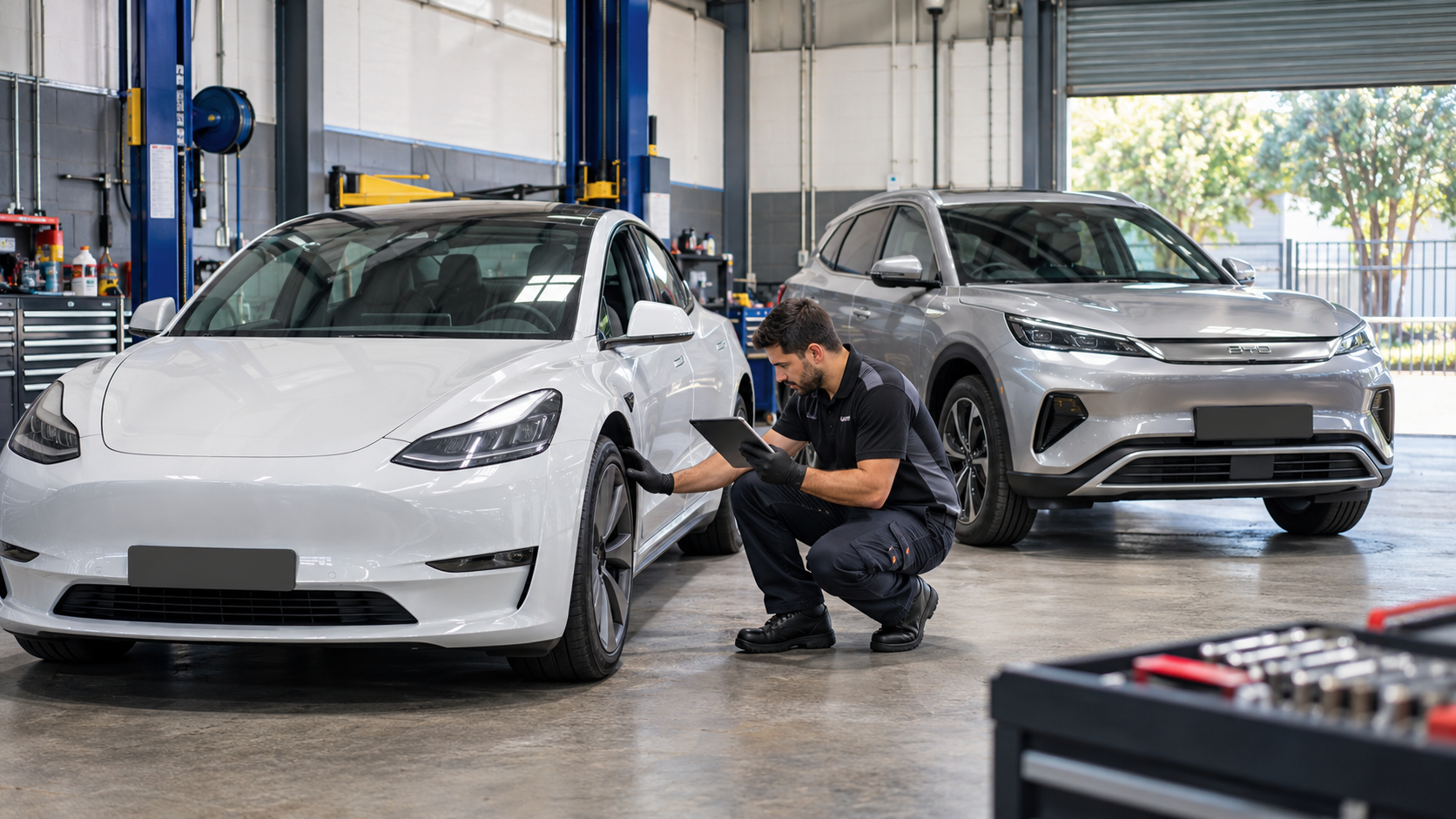
If you drive a Tesla, BYD, Polestar, Hyundai Ioniq or any other electric car in Victoria, you may have already noticed something strange when it is time for an inspection. You ring your usual mechanic for a roadworthy certificate and they tell you they cannot test EVs. You ring the shop next door and get the same answer. Suddenly a basic job feels like a hunt. If you are searching for an EV roadworthy certificate near me, this guide explains what is really going on, how to spot a workshop that can help, and the questions to ask before you book. For a refresher on how the roadworthy process works in general, our earlier guide on the roadworthy certificate and vehicle safety is a good starting point.
The short answer is that an EV is not just a petrol car with a battery in the boot. It carries a high voltage system that needs specific training, insulated tools and workshop setup to inspect safely. Victoria’s Licensed Vehicle Tester scheme is built around training, equipment and premises, and not every workshop holds the right mix to inspect an electric vehicle. This article walks through the rules, the practical reasons and how you can find a certified tester you trust.
Why not every workshop can issue an EV roadworthy certificate
In Victoria, every roadworthy certificate is issued by a Licensed Vehicle Tester, often shortened to LVT. The Department of Transport and Planning, formerly part of VicRoads, runs this scheme. A workshop must hold the right LVT licence, use an approved premises and employ Examining Mechanics with the right training for the vehicle category being tested.
A standard LVT licence covers light vehicles. On paper, this includes EVs. In practice, the inspection, the tools and the safe work method for an EV are different enough that many workshops hold back from issuing certificates for them. Here are the main reasons.
High voltage safety
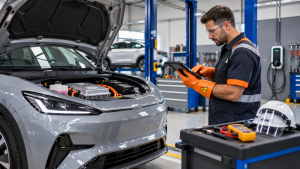
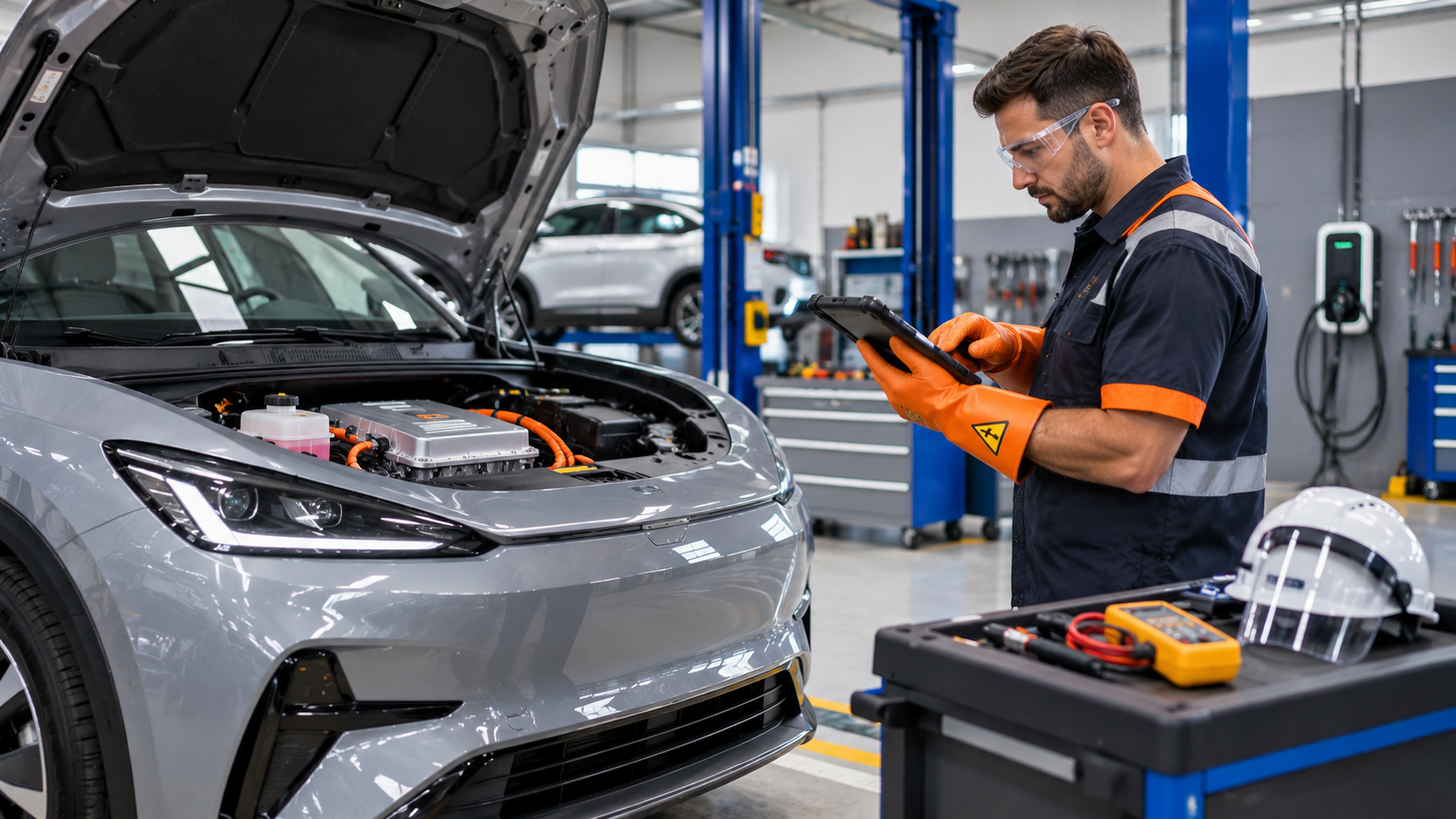
A Tesla Model Y, BYD Atto 3 or Polestar 2 runs on battery packs that sit above 400 volts. Working anywhere near that system without the right training is a serious risk. A regular mechanic is trained around 12 volt circuits, petrol engines and hydraulic brakes. EV systems demand a different mindset and different habits.
Specialised training for Examining Mechanics
For a workshop’s mechanic to inspect an EV safely, they usually need extra training on high voltage components, battery packs, shutdown procedures and electric parking brakes. This training is offered by a handful of accredited providers in Victoria and the industry keeps adding to it as more EV models come onto the roads. A mechanic trained ten years ago on petrol engines is not automatically trained on today’s EV platforms.
The right tools and equipment
EV inspections need insulated hand tools, non contact voltage testers and often a battery health scan tool that can talk to the car’s own management system. Most workshops set up for petrol cars have none of these. Buying and maintaining the right kit is a real investment. Workshops only make that investment when they see enough EV volume to justify it.
Approved premises and insurance
LVT licences include a check of the workshop’s premises and signage. For EVs, insurers also expect a safe work zone, clear emergency procedures and staff training records. Some owners choose not to extend their cover to EV work, which means they cannot legally offer the service, even if they have the licence on paper.
What the new EV roadworthy rules in Victoria mean for owners
The Victorian Government has been tightening how EV work is handled across the state. More EV specific training is being rolled out by accredited providers. Workshops that want to keep inspecting EVs need to confirm their Examining Mechanics have completed up to date courses. Industry bodies like VACC have been pushing for clearer standards too, so owners get a consistent experience.
What this means in everyday terms:
- Not every LVT workshop will inspect EVs. Some will quietly stop offering the service rather than invest in new training and tools.
- Wait times at EV ready workshops may stretch out during busy months, so book ahead if you plan to sell your car.
- A certificate issued by a workshop that is not set up for EVs may cause friction at transfer time if VicRoads or the buyer raises questions.
- Owners who search for EV roadworthy licence Victoria are looking for the right thing: a workshop that has the licence and the EV ready setup.
The regulations do not change the certificate you receive. A certificate issued by a certified EV roadworthy tester is the same Certificate of Roadworthiness as any other. What changes is who can safely and legally issue it for your car.
How to find an EV roadworthy certificate near me
The search phrase that gets most people to the right workshop is a simple one. The challenge is filtering through results. Here is a practical method.
1. Start with the official tester locator
The Department of Transport and Planning publishes a locator tool to find Licensed Vehicle Testers in Victoria. Search by suburb or postcode. The locator does not always say which workshops handle EVs, so treat it as step one, not the final answer.
2. Check workshop websites for EV mentions
A workshop set up for EVs usually says so on the website. Look for the words electric, EV, Tesla, BYD or hybrid on the service pages. If the website makes no mention of EVs at all, the safest assumption is that the workshop does not have an EV focus.
3. Ring ahead and ask three short questions
A short phone call saves a wasted trip. Ask:
- Do you currently inspect EVs for roadworthy certificates?
- Does your Examining Mechanic have high voltage training?
- What day this week can you fit my car in?
A workshop that handles EVs will answer each question clearly in a minute or two. A workshop that does not will hesitate or try to transfer you around the office.
4. Use local word of mouth
Local EV owner groups on social media are a goldmine for workshop recommendations. Members share what worked and what did not, with recent dates and suburbs. A fresh review from last month in your own area is often better than a five star rating from three years ago.
5. Think about distance and battery
Searching for an EV roadworthy certificate near me is not only about convenience. A nearby workshop means less battery drain on the way there, less chance of range anxiety on test day and an easier return trip if a retest is needed. A workshop ten minutes away is almost always a better choice than one across the city.
Questions to ask before you book a certified EV roadworthy tester
Once you have shortlisted a workshop, these ten questions will confirm you are in safe hands:
- Are you a Licensed Vehicle Tester in Victoria? Can you confirm your licence number?
- Do you inspect EVs on a regular basis? Which models have you tested recently?
- Does the Examining Mechanic who will inspect my car hold current EV or high voltage training?
- What tools do you use for the EV side of the inspection?
- Do you have insulated tools and a safe work zone for EV work?
- How long will the full inspection take?
- What is the current fee for a roadworthy certificate for an EV?
- If the car fails, how does the retest process work and what are your fees for repairs?
- Will you give me a written list of any items that fail the inspection?
- Do you provide both a printed and an emailed copy of the certificate?
Any workshop that handles EVs regularly will enjoy answering these questions. If a workshop pushes back, treats the questions as a nuisance or avoids answering directly, keep looking.
Red flags that mean a workshop is not set up for EVs
Not every warning sign is obvious. Watch out for these common ones:
- The workshop says any car is the same and brushes off the EV question.
- Staff cannot name which EV models they have tested lately.
- The booking person is unsure whether the Examining Mechanic has done EV training.
- The website lists only petrol and diesel services, with no mention of EV, hybrid or high voltage work.
- The workshop quotes a very low price with no detail on what is covered.
- You are told your car can be inspected today, with no question about its charge level or how it will be moved onto the hoist.
- The Examining Mechanic does not ask for the owner’s manual or any service records.
Trust your instincts. The right workshop will take your car seriously and will be happy to explain what they do and why.
Why a local certified EV roadworthy tester is worth the short drive
Searches for electric car roadworthy Cranbourne West and similar local phrases rise every month. There is a good reason to stay local.
- A short drive protects your battery charge. A hunt across the city burns range you may need later.
- A local workshop knows the suburbs you drive in, which helps when they explain tyre wear, suspension issues or brake notes.
- A repeat relationship with one workshop means a tidier service history, which lifts the value of your car when you sell.
- If you need a quick follow up, a local workshop is five minutes away, not forty.
- A local business depends on local word of mouth, so you tend to get a careful job.
Our team at Singh’s Tyre and Auto Centre is based in Cranbourne West and looks after drivers across Cranbourne, Berwick, Narre Warren, Skye, Clyde, Hampton Park, Keysborough and Hallam. We are certified to conduct roadworthy inspections and look after all makes and models.
What happens on inspection day with a certified EV roadworthy tester
On the day, the process is calm and methodical. The Examining Mechanic will:
- Confirm your ID and the car’s details.
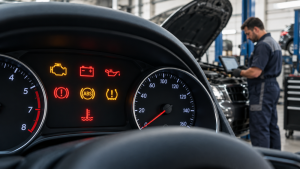
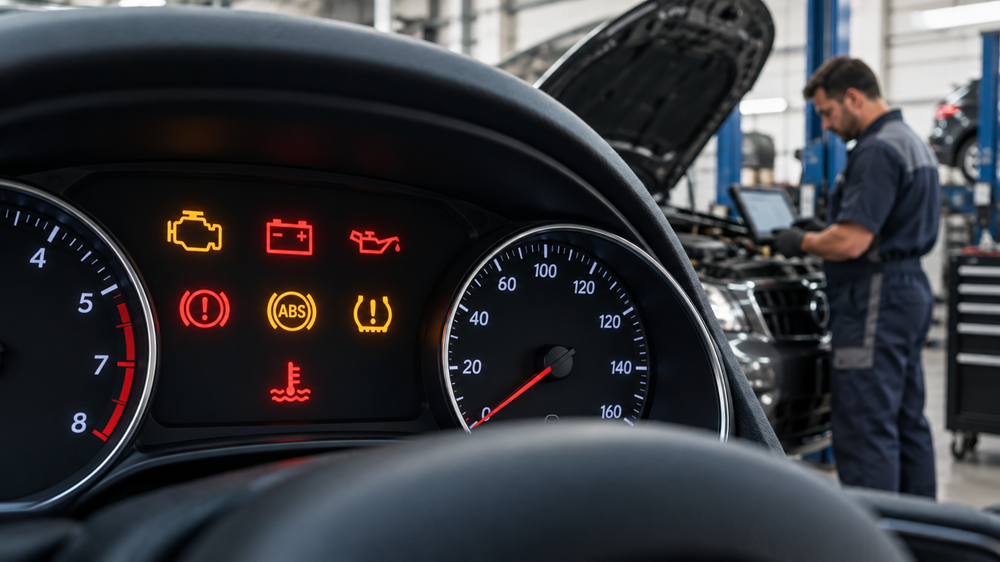
- Read any warning lamps on the dashboard before the car is moved.
- Drive the car gently to the hoist, using the car’s own creep mode or low speed.
- Run through the standard safety checks: brakes, steering, suspension, tyres, lights, seats, seatbelts, windscreen, wipers, horn and reflectors.
- Switch to EV focused checks: high voltage cabling, charge port, battery pack mounting and shielding, drive unit warning lamps, regenerative braking and the electric parking brake.
- Note any items that fail the standard, and give you a written list before you leave.
- Hand you a passed certificate on the spot, and often send a copy by email too.
The full process usually takes between 60 and 90 minutes. If items need fixing, you have seven days to come back for a free retest of only the failed items.
Simple pre inspection prep for EV owners
A little preparation goes a long way. Clean the car, charge the battery to at least 70 percent, bring your registration papers and service history, and test every light and wiper yourself. Our short piece on essential car maintenance tips every car owner should know covers the everyday checks that catch small issues before they cost you a retest fee.
Booking an EV roadworthy certificate near Cranbourne West
If you are weighing up where to go, our team at Singh’s Tyre and Auto Centre in Cranbourne is a local option worth a call. We handle roadworthy certificates for all makes and models, take the time to answer your questions, and can tell you on the phone whether we are the right fit for your specific car. Call 03 8752 4599 to check availability or lock in a slot. You can also browse our other car care guides if you want a bit more reading before you decide.
Frequently asked questions
Q. What is an EV roadworthy licence in Victoria?
There is no separate EV only licence in Victoria. A workshop holds a Licensed Vehicle Tester licence under the Department of Transport and Planning. To inspect EVs safely and legally, the workshop and its Examining Mechanic also need the right training, tools and premises for high voltage work. When people search for EV roadworthy licence Victoria, they are usually asking whether a specific workshop is set up for the job.
Q. How do I find a certified EV roadworthy tester?
Start with the Department of Transport and Planning tester locator, then call the shortlist and ask whether they currently inspect EVs. A local workshop that answers those questions clearly and talks about EV training is a good sign.
Q. Does an electric car roadworthy in Cranbourne West cost more than a petrol car?
Pricing varies by workshop. Some charge the standard RWC fee for all makes and models. Others charge a little extra for EVs because of the specialised training and equipment involved. Call the workshop for a current quote before you book.
Q. Why do some workshops refuse to inspect EVs?
Usually because they do not yet have the right training, tools, insurance or workshop setup. This is not a reflection on the workshop as a whole. It is a sign they are being careful about the work they take on.
Q. Are the new EV roadworthy rules in Victoria backdated?
Any certificate already issued stays valid for the full 30 days from the day it was issued. Changes apply to how workshops are trained and equipped going forward, not to certificates already in your hand.
Q. Can I use any roadworthy certificate to transfer my EV?
The certificate must be current (within 30 days of issue) and must have been issued by a Licensed Vehicle Tester. If there is any doubt about whether the workshop was set up to inspect your EV, ring the Department of Transport and Planning before the transfer rather than after.
Q. What if I live outside the Cranbourne West area?
Use the official tester locator to find a workshop close to home. Ring ahead with the three short questions above. For nearby suburbs such as Cranbourne, Berwick, Narre Warren, Skye, Clyde, Hampton Park, Keysborough and Hallam, our team is a short drive away.
Q. Do I need to tell the workshop my car is an EV when I book?
Yes. Always mention the make, model and year, and say it is an EV or a plug in hybrid. This lets the workshop plan the right hoist, tools and inspection time for your car.
Ready to book with confidence
Finding an EV roadworthy certificate near me is simpler once you know what to look for. A certified EV roadworthy tester is one who holds the right Licensed Vehicle Tester licence, keeps up to date with EV training, uses the right tools, and is happy to answer your questions before you hand over the keys. Local workshops that care about EV work are out there, and a short list of the right questions puts you in control of the booking.
If you are in the south east of Melbourne, our team at Singh’s Tyre and Auto Centre in Cranbourne looks after roadworthy inspections for all makes and models. Call 03 8752 4599 to talk through your car and find a time that suits.