
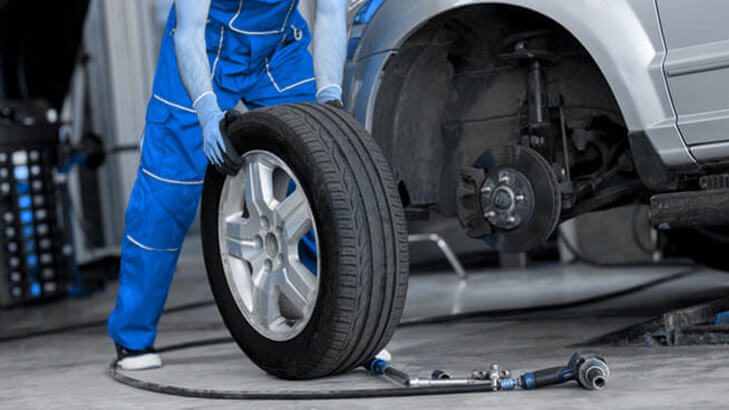
A flat tyre rarely happens at a convenient time, and once you’ve swapped it for the spare in your boot, a new question usually follows: is it actually safe to keep driving, and if so, for how long? If you’ve found yourself searching for tyre sales in Cranbourne after a blowout or a slow puncture that’s finally caught up with you, you’re not alone — this is one of the most common questions drivers ask after changing a tyre on the side of the road. The short answer is that it depends entirely on what type of spare you have. Here’s what you need to know about driving safely on a spare tyre, including how far you can go, how fast you can drive, and when it’s time to get a proper replacement.
Not All Spare Tyres Are the Same
Before you can answer “how far” or “how fast,” you need to know what kind of spare is sitting in your vehicle. There are generally three types:
- Space-saver spare (the “skinny” or “temporary” spare) – A smaller, narrower wheel designed purely to get you out of trouble. These are the most common type found in modern cars, especially smaller hatchbacks and sedans.
- Full-size spare – Identical in size to your regular tyres, sometimes even matching the tread pattern. These are more common in utes, 4WDs, and larger SUVs.
- Run-flat tyres – Not a spare at all, but a tyre built with reinforced sidewalls that allow you to keep driving for a limited distance after losing pressure.
Each of these comes with very different rules for how they should be used, and mixing them up is where most drivers run into trouble.
How Far Can You Drive on a Space-Saver Spare?
Space-saver spares are intended as a temporary fix only — not a replacement tyre. As a general rule, you shouldn’t drive more than about 80 kilometres on a space-saver before getting your original tyre repaired or replaced. Some manufacturers allow a bit more, but treating 80 kilometres as your outer limit is a safe approach for most vehicles. It’s always worth checking your owner’s manual or the sidewall of the spare itself, since the exact distance and speed limit can vary between manufacturers.
The reason for this limit comes down to how the spare is built. Space-savers use a smaller diameter, narrower tread, and thinner construction than your standard tyres. They’re simply not designed to handle the same loads, cornering forces, or heat build-up over long distances.
How Fast Can You Drive on a Space-Saver Spare?
Speed is just as important as distance. Most manufacturers recommend keeping your speed at or below 80 km/h when driving on a space-saver spare. Exceeding this significantly increases the risk of a blowout, since the tyre generates heat far more quickly than a standard tyre at the same speed, and its thinner sidewalls simply aren’t built to dissipate that heat safely.
Driving too fast on a space-saver doesn’t just risk the tyre itself — it can also affect your vehicle’s handling. Because the spare is smaller in diameter, it changes your car’s ground clearance and can throw off your speedometer reading slightly, along with affecting systems like ABS and traction control. Braking distances also increase, so it pays to leave extra space between you and the car in front and avoid sudden manoeuvres.
What About a Full-Size Spare?
If your vehicle has a full-size spare that matches your other tyres, you generally have far more flexibility. Full-size spares don’t come with the same strict distance and speed limits, since they’re built to the same specifications as your regular tyres. That said, it’s still worth checking the tread depth and age of the spare, since it’s easy to forget about a spare tyre that’s been sitting in the boot for years without use.
Should You Drive on the Freeway With a Spare?
Wherever possible, avoid freeways and high-speed roads while running on a space-saver spare. Stick to local roads with lower speed limits, and if you absolutely must use a freeway, keep to the far-left lane, drive well under the speed limit, and get off as soon as it’s safe to do so. The combination of a smaller tyre, reduced grip, and high sustained speed is exactly the scenario space-savers aren’t built for.
Signs You Shouldn’t Drive on Your Spare At All
Before installing any spare, it’s worth doing a quick visual check. Don’t drive on a spare tyre if you notice:
- Cracking, dry rot, or perishing in the rubber
- Low or uneven tyre pressure
- Visible bulges or damage to the sidewall
- A manufacture date older than 6–10 years, even if it looks unused
Spare tyres often sit untouched for years, and rubber degrades over time regardless of how many kilometres it’s actually travelled. A spare that looks fine at a glance can still be unsafe to drive on if it’s old or improperly inflated.
What Happens If You Push a Spare Too Far?
Driving further or faster than recommended on a space-saver spare doesn’t just risk a blowout. Prolonged use can place extra strain on your transmission, suspension, and wheel bearings, particularly on all-wheel-drive vehicles where mismatched tyre sizes can cause drivetrain damage. What starts as a quick fix for a flat tyre can end up turning into a far more expensive repair bill if the spare is pushed beyond its limits.
Get Back on Proper Tyres as Soon as Possible
A spare tyre is designed to get you out of trouble, not to become a long-term solution. As soon as you’re able, it’s worth having your original tyre inspected to see whether it can be repaired or needs replacing, and having your spare checked and reinflated before it goes back in the boot. If you’ve had a blowout, a slow leak, or you’re simply not sure whether your current tyres are safe, our team of experienced mechanics in Cranbourne can inspect your tyres, check your spare, and get you sorted with the right replacement quickly. At Singh’s Tyre & Auto Centre, we carry a wide range of tyres to suit most makes and models, and we’re always happy to talk you through your options so you’re not left guessing. Drop in or give us a call to get your tyres checked and back on the road safely.
Don’t risk it on a worn or ill-fitted spare — book your tyre check with Singh’s Tyre & Auto Centre today. Call us now on 03 8752 4599 to get back on the road safely.