
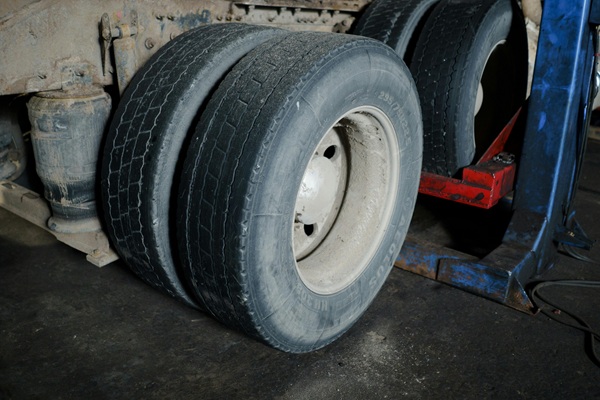
Your tyres are the only part of your vehicle that makes contact with the road. Every braking force, every steering input and every acceleration demand you make is transmitted through four contact patches — each roughly the size of a human hand. When those tyres are worn, cracked or below the legal tread depth limit, that contact becomes unreliable in ways that are not always visible until it is too late. At Singh’s Tyre & Auto Centre, our team inspects tyres in Cranbourne every day and the pattern we see consistently is the same: drivers underestimate how quickly tyre condition deteriorates and overestimate how much grip a worn tyre still provides. This article addresses that gap with the facts — because understanding the real risks of worn tyres is the most effective way to motivate action before a tyre failure or accident makes the decision for you.
Whether you drive a family SUV, a daily commuter or a diesel 4WD, the risks described in this article apply equally. Tyre condition is not a premium concern — it is a fundamental one.
What tread depth actually does — and what happens when it is gone
Tyre tread is not primarily about grip on dry roads. On a dry road with adequate friction, even a bald tyre maintains reasonable contact and grip at low to moderate speeds. The critical function of tread is water dispersal. The grooves, channels and sipes cut into the tyre surface are engineered to channel water away from the contact patch at speed, maintaining rubber-to-road contact even on a wet surface.
A new tyre typically starts with a tread depth of 7 to 8 millimetres. The legal minimum tread depth in Australia is 1.5 millimetres across the central three-quarters of the tyre width. However — and this is the point most drivers miss — tyre performance degrades significantly well before the 1.5 mm legal limit is reached. Research conducted across comparable markets consistently shows that wet braking distances increase dramatically as tread depth falls below 3 millimetres. A vehicle braking from 80 km/h on a wet road with tyres at 1.6 mm tread depth requires significantly more distance to stop than the same vehicle fitted with tyres at 4 mm tread depth. In an emergency, that difference can be the difference between stopping safely and a collision.
This is why our team recommends replacing tyres when they approach 3 millimetres of remaining tread rather than waiting for the legal minimum. Driving to the absolute minimum is legal — but it leaves very little safety margin for the wet road conditions that Melbourne and south-east Victoria experience throughout autumn, winter and spring.
The specific risks worn tyres create in wet and adverse conditions
Aquaplaning is the most dangerous wet-weather consequence of worn tyres. When a tyre cannot disperse water fast enough to maintain contact with the road surface, the tyre effectively floats on a film of water — losing all directional control and all braking effectiveness simultaneously. The driver experiences this as a sudden lightness in the steering, often accompanied by a change in engine note as the driven wheels lose traction. Recovery from aquaplaning requires reducing speed gradually and avoiding abrupt steering inputs, but at highway speeds there is often no time to respond before the vehicle departs its lane.
The threshold speed at which aquaplaning begins drops sharply as tread depth decreases. A tyre with adequate tread disperses water efficiently and aquaplaning is unlikely at normal road speeds. A tyre at or near the legal minimum tread depth may begin to aquaplane at speeds well below the freeway limit in heavy rain. For drivers who regularly use the Monash, South Gippsland or Peninsula Link freeways — all common routes for south-east Melbourne drivers — this risk is not hypothetical.
Handling in emergency manoeuvres is also significantly compromised by worn tyres. The tyre’s ability to generate lateral grip — the grip that keeps your vehicle tracking in the direction you steer — is directly related to the condition and quantity of rubber in the contact patch. A worn tyre has less rubber, reduced structural integrity in the tread compound and, in many cases, a harder, less pliable surface from heat cycling and age. All of these factors reduce the tyre’s ability to respond to a sudden lane change or emergency steering input at speed.
Tyre age and cracking — the risk drivers cannot see from the driver’s seat
Tread depth is the most visible indicator of tyre condition, but it is not the only one. Tyre rubber degrades with age through a process called oxidation, regardless of how many kilometres the vehicle has covered. A tyre that looks visually acceptable — with reasonable tread remaining — can have significant internal structural degradation if it is more than five to seven years old. This degradation is most visible as surface cracking in the sidewall or tread area, but internal separation and belt degradation can occur without obvious external signs.
The consequence of an aged tyre with compromised structural integrity is tyre failure — specifically, a blowout or tread separation at speed. A sudden tyre failure at highway speed is one of the most dangerous events a driver can experience, as it produces an immediate and violent change in vehicle direction that many drivers do not have the skill or time to manage safely. Manufacturers and tyre industry bodies in Australia consistently recommend that all tyres be replaced at or before ten years from the date of manufacture, regardless of remaining tread depth.
Every tyre sold in Australia carries a four-digit DOT code on the sidewall — the last four digits indicate the week and year of manufacture. A tyre showing 2318 was manufactured in the 23rd week of 2018. If you are unsure of your tyres’ age, any qualified mechanic can read this code for you during a routine tyre inspection.
The legal consequences of driving on worn tyres in Victoria
Driving on tyres below the legal tread depth limit in Victoria is an offence under road rules legislation and carries financial penalties. A vehicle found to have tyres below the 1.5 mm legal minimum can be defected and taken off the road until the tyres are replaced — and in the event of an accident caused by tyre condition, insurance claims can be disputed or denied if the tyre condition is found to be a contributing factor. For drivers seeking quality tyre sales in Cranbourne, Singh’s Tyre & Auto Centre stocks a wide range of leading tyre brands across all vehicle types and price points, and our team will never recommend a product that exceeds what your vehicle or driving pattern actually requires.
The insurance implications of worn tyres are particularly important for family vehicle owners. Comprehensive vehicle insurance policies in Australia typically contain clauses relating to the roadworthy condition of the insured vehicle. If an accident occurs and an assessor determines that worn tyres contributed to the outcome, the insurer may reduce or deny the claim on the basis that the vehicle was not maintained in a roadworthy condition. This is not a hypothetical risk — it is a documented outcome in Australian insurance dispute cases.
How to check your tyre condition between services
A basic tyre check takes less than five minutes and requires no tools. Walk around the vehicle and visually inspect each tyre for obvious cracking in the sidewall, any visible bulging or deformation, foreign objects embedded in the tread, and uneven wear patterns that suggest a wheel alignment or inflation issue. Uneven wear — where the inner or outer edge of the tyre is wearing faster than the centre — is a reliable indicator of alignment or inflation problems that will shorten tyre life significantly if left unaddressed.
For tread depth, the 20-cent coin test is a simple field method. Insert a 20-cent coin into the tread groove with the platypus bill pointing into the tyre. If the bill is fully visible, the tread depth is likely at or approaching the minimum — the tyre should be professionally measured and considered for replacement. For a definitive measurement, a tread depth gauge is inexpensive and available at any automotive retailer. Anything below 3 mm on any tyre warrants attention.
Tyre pressure should also be checked monthly. Consistently underinflated tyres generate excess heat, wear the outer edges of the tread faster than the centre and consume more fuel. Overinflated tyres wear the centre of the tread, reduce the contact patch and compromise grip. Correct pressures for your vehicle are found in the owner’s manual and on a placard located on the driver’s door jamb.
Get your tyres inspected by qualified mechanics — before the risk becomes a reality
Worn tyres are a problem that never announces a deadline. They degrade gradually, the risks increase incrementally and the consequences, when they arrive, are sudden and serious. The most sensible and cost-effective approach is a proactive tyre inspection — knowing where your tyres stand before you are in a situation where condition has become critical. Our mechanics in Cranbourne inspect tyre tread depth, sidewall condition, age, inflation and wear patterns as part of every vehicle service — and we will give you an honest, straightforward assessment of whether your tyres are safe, approaching replacement or overdue.
Singh’s Tyre & Auto Centre is a family-owned Repco Authorised Service centre located at 1/12 Universal Way, Cranbourne West, with over 15 years of experience in tyre sales, fitting, balancing and alignment across all makes and models. We stock leading tyre brands to suit all budgets — from everyday commuter tyres through to SUV, 4WD and performance fitments. Once fitted, we carry out professional balancing and a wheel alignment check to ensure even wear and safe handling from day one. Our work is backed by the Repco Nationwide Warranty at over 500 locations across Australia. To book a tyre inspection or to ask our team what tyres your vehicle needs, call 03 8752 4599 or visit automobileservice.com.au. We welcome drivers from Cranbourne, Clyde · Clyde North · Cranbourne North · Cranbourne East · Cranbourne South · Berwick · Narre Warren · Narre Warren South · Botanic Ridge · Lynbrook · Lyndhurst · Hampton Park · Hallam · Doveton · Endeavour Hills · Keysborough · Noble Park · Springvale · Dandenong · Skye · Sandhurst .